A moissanite engagement ring gives you a bright, durable centre stone for a fraction of the cost of a diamond, which means you can spend your budget on the design you actually want. This guide walks you through the five decisions that matter: stone shape, setting, stone size, metal colour and ring size.
If you’re still deciding between moissanite and diamond, start with our moissanite vs diamond comparison.
Why choose moissanite for an engagement ring?
- Durable for everyday wear. At 9.25 on the Mohs scale, moissanite is harder than every popular gemstone except diamond, so it handles daily life well.
- Lots of sparkle. Moissanite has more “fire” (rainbow flashes) than diamond, which shows beautifully in a solitaire or halo.
- A bigger look for your budget. A large moissanite costs a small fraction of a diamond of the same size.
- Lab-created. No mining is involved in producing the stone.
1. Choose the stone shape
The shape sets the whole character of the ring.
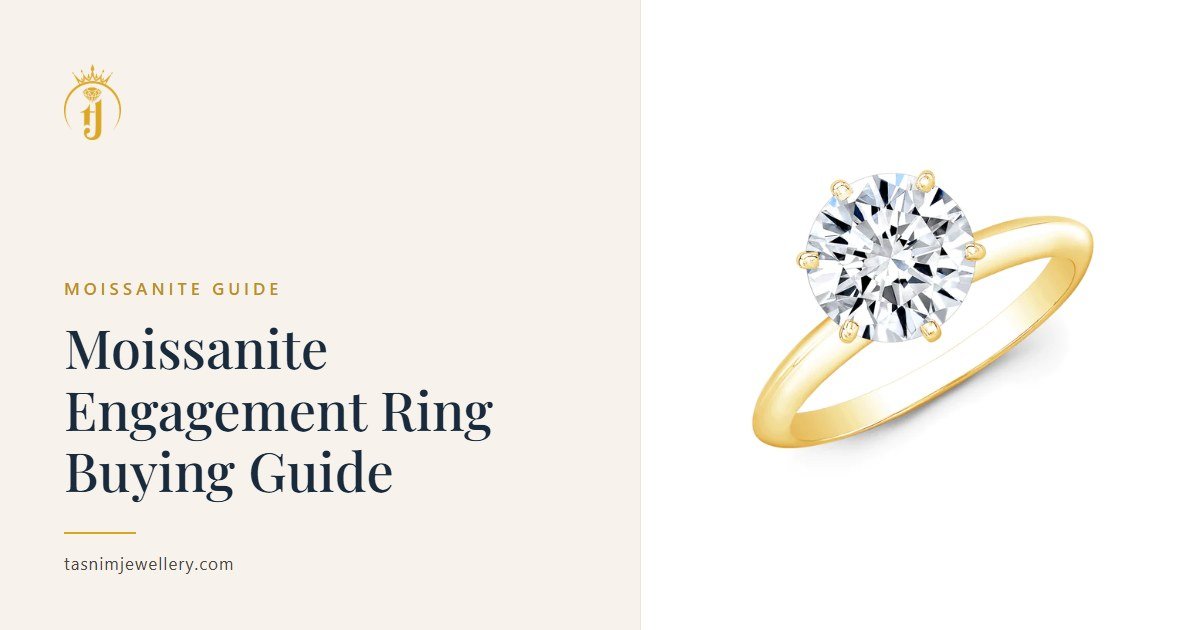
- Round brilliant: the classic. Maximum sparkle and the most timeless look.
- Oval: looks larger than a round stone of the same weight and makes fingers look longer. One of the most popular choices today.
- Emerald cut: long, step-cut facets that give “hall of mirrors” flashes rather than glitter. Elegant and vintage-feeling.
- Pear: a teardrop that’s soft and romantic, and flattering on most hands.
- Princess and radiant: square or rectangular with lots of sparkle and a modern, crisp outline.
- Cushion: a square with rounded corners, softer than a princess, with a vintage glow.
- Marquise: a long, pointed shape that gives the most finger coverage for its size.
Not sure? Round and oval are the safest bets for a surprise proposal.
Shop the guide
Solitaires in four shapes


2. Choose the setting
The setting is how the stone is held, and it changes both the look and how practical the ring is.
- Solitaire: a single stone on a plain or pavé band. Clean and timeless; lets the centre stone do the talking.
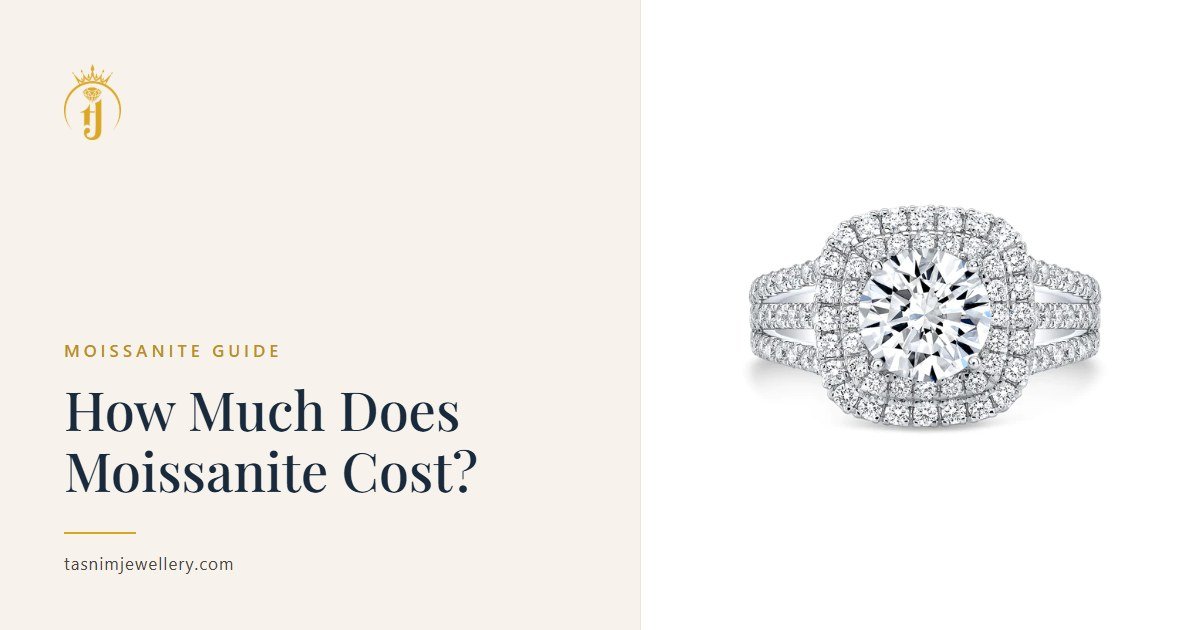
- Halo: a ring of small stones around the centre stone, which makes it look bigger and adds sparkle.
- Hidden halo: small stones tucked under the centre stone, visible from the side. A subtle surprise detail.
- Three-stone: a centre stone with a smaller stone on each side, often said to represent past, present and future.
- Pavé band: small stones set along the band for extra sparkle all the way round.
- Bridal set: an engagement ring with a matching wedding band designed to sit flush against it.
Tip: if your partner works with their hands, a lower setting and a plain or half-pavé band will snag less than a tall setting.
Shop the guide
Halo and three-stone designs


3. Choose the stone size
Because moissanite is a little lighter than diamond, it’s best compared by its diameter in millimetres. The table shows round stones and the diamond carat weight each size looks like from the top.
| Round stone diameter | Looks like (diamond carat) |
|---|---|
| 5.0 mm | about 0.5 ct |
| 6.5 mm | about 1 ct |
| 7.5 mm | about 1.5 ct |
| 8.0 mm | about 2 ct |
| 9.0 mm | about 3 ct |
For most hands, 6.5 mm to 8 mm is the sweet spot: clearly a statement stone without looking out of scale. On very slim fingers, a 2 ct look can appear larger than it would on a wider hand.
4. Choose the metal colour
Our engagement rings are made in 925 sterling silver with a choice of yellow gold, white gold or rose gold plating, so you get the look of gold at a much more accessible price.
- White gold: bright and modern, and makes the stone look its whitest.
- Yellow gold: warm and classic, very on trend, and flattering on warmer skin tones.
- Rose gold: soft and romantic, with a vintage feel.
Look at the jewellery your partner already wears: if they always reach for silver tones, choose white gold; if they wear gold, choose yellow or rose. Want a design in solid gold? Message us before you order and we’ll tell you if it can be made.
5. Get the ring size right
Our rings come in US sizes 5 to 14. A few ways to find the right size discreetly:
- Borrow a ring your partner already wears on the same finger and have a local jeweller measure it.
- Wrap a strip of paper around the base of the finger, mark where it overlaps, and measure the length in millimetres against a ring size chart.
- Ask a friend or family member who might know.
If you’re between sizes, choose the larger one, especially for wider bands. Fingers swell slightly in warm weather and at the end of the day.
Caring for a moissanite engagement ring
Moissanite never goes cloudy, but everyday life leaves oils and lotions on the stone that dull its sparkle. A quick clean with warm water, mild soap and a soft toothbrush brings it straight back. Take the ring off for swimming, cleaning with chemicals and the gym to protect the plating. Our full moissanite jewellery cleaning guide has step-by-step instructions.
Frequently asked questions
Yes. It is hard enough for everyday wear, keeps its sparkle for life and lets you choose a larger stone for your budget.
Most people can’t tell by eye. Moissanite does show a little more rainbow sparkle, and some testers can identify it. See does moissanite pass a diamond tester? for the details.
Yes. Basic engraving is free on our pieces; special characters and longer messages are charged. Note that engraved pieces can’t be returned.
Most orders ship within 10 business days, with free worldwide shipping, and delivery usually takes about a week after that depending on your destination.
Find your ring
Browse our full range of moissanite engagement rings, add a matching band from our moissanite wedding rings, or explore all moissanite rings. Every ring comes with free worldwide shipping, 15-day returns on unused pieces and a free 3-month warranty.